

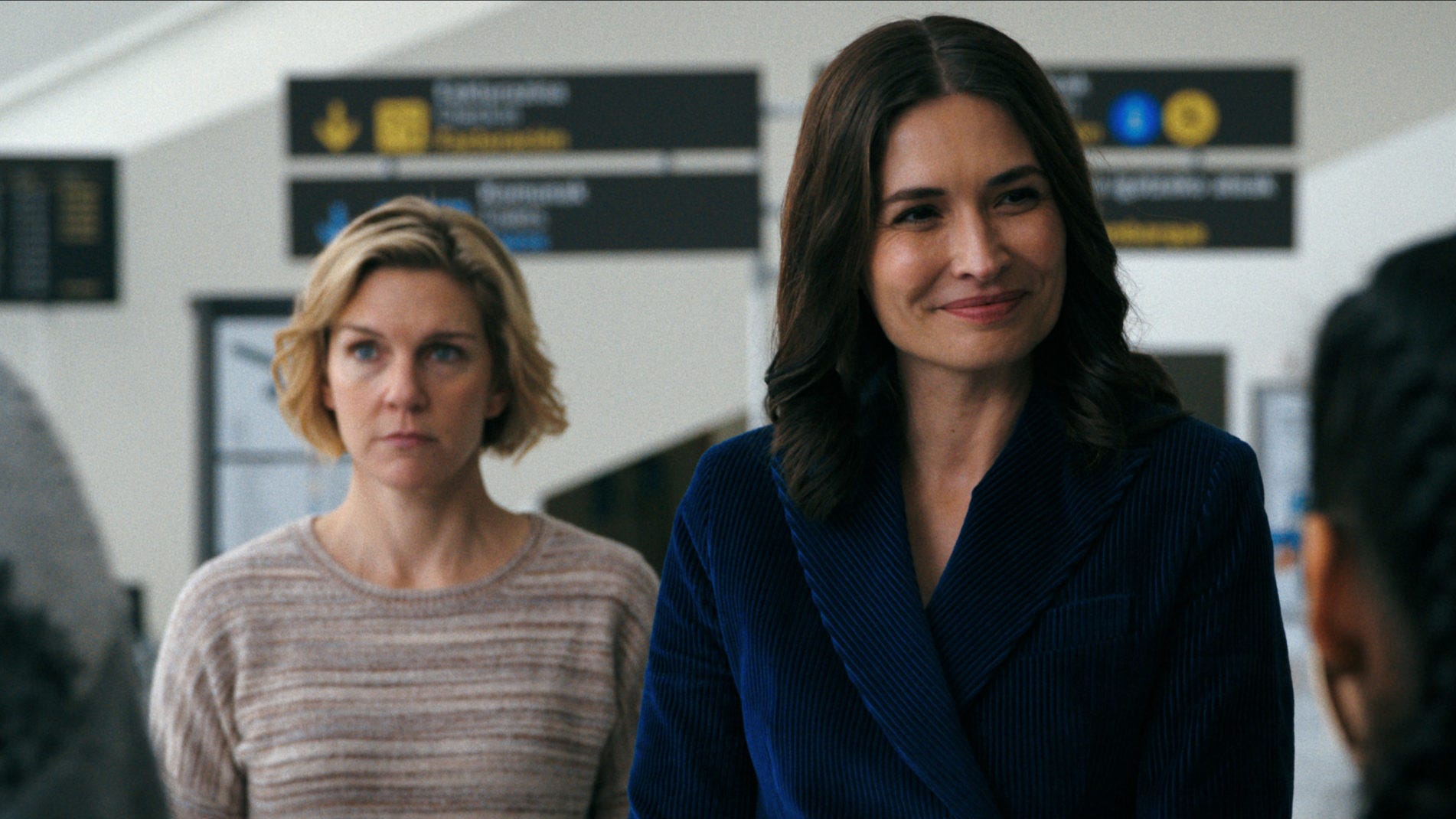
Apple’s 2025 series Pluribus is a variation on Invasion of the Body Snatchers. Like its blueprint(s), it’s an ambivalent anti-communist metaphor. Unlike its predecessors, though, the invading collective robs humanity not, chiefly, of its ability to love, but of its ability to grieve. It is not necessarily political ideology, but happiness itself which becomes an oppressive force—which means that happiness and bad feelings become themselves a kind of ideology.
—
I have a sale today; 40% off, $30/year. Freelancing this year looks…tough. If you value my writing and want it to continue, please consider helping out.
—
The broad outline of Pluribus’ plot is familiar. As in body snatcher movies of yore, some disease-like something arrives from outer space, and soon virtually all humans on earth have been infected and joined in a hive mind. Those affected claim they are deliriously happy and plan on doing everything in their power to convert the 13 survivors who have natural immunity and failed to convert.
The story centers mostly on Carol (Rhea Seehorn), a pirate romance novelist and one of the few uninfected. Carol, almost alone among the survivors, is determined to fight the hive mind collective and return each human’s agency and self.
Carol’s quest is sometimes presented as heroic and sometimes as significantly less so. The hivemind has ended all war and crime on earth; it’s also instituted radically reduced carbon emissions and ceased cruelty to animals. The hivemind can’t even lie; they’ve ended falsehood. In contrast, when Carol attempts to coerce information from her assigned chaperone, Zosia (Karolina Wydra), the entire hive mind experiences seizures and millions die. The communist dystopia offers peace and goodwill; American individualism offers mass death. Which side are we supposed to be on here again?
The show does present Carol as a cranky, flawed, and often unlikable person. She’s abrupt, arrogant, and a problem drinker. Even before the apocalypse, she grumbles and whines constantly, notwithstanding the fact that her books have made her fabulously wealthy and acclaimed. A big part of the reason she can’t recruit allies from among the other survivors is that she’s so abrasive that no one wants to talk to her. Even the superpeaceful, super friendly collective hivemind literally evacuates Albuquerque rather than spend more time with her.
Carol is impossible. But there are some clues that her impossibility is a matter of circumstance rather than (solely one of) character. Almost all the other survivors Carol meets have loved ones—children, parents, relatives, spouses—who have been transformed into part of the hivemind. These loved ones are no longer exactly themselves, but they aren’t exactly dead either. That means that most survivors are related to, or connected to the hivemind even if they aren’t part of it.
In contrast, Carol’s wife Helen (Miriam Shor) has an adverse reaction to the viral transformation process and dies horribly in front of her. Carol may be cranky and angry because she’s a cranky, angry person. But she’s also cranky and angry because she unexpectedly and traumatically lost the love of her life. The apocalypse happened—her wife died. And yet the world goes on.
Worse, as Carol struggles with depression, rage, and despair, everyone around her lines up to tell her how happy they are. When she becomes upset and angry—a fairly normal reaction for someone whose spouse has just been murdered in front of them—the hivemind melts down and her fellow survivors shame her, telling her that her negative emotions are responsible for mass death. The world is cheerful, and so if she selfishly prioritizes her grief and refuses to be cheerful, she’s responsible for destroying the world.
The hivemind is not just happy. It demands happiness—both in the sense that it is focused on absorbing Carol, and in the sense that it pressures her to cheer up through negative reinforcement (leaving the city) and positive (rebuilding her favorite café, making her ideal woman her chaperone.)
“Perform the proper affect” could be seen as a Communist dictat; Stalin demanded vigorous and public expressions of joy and assent from Soviet comrades on pain of death. But happiness as ethos is also very much a capitalist imperative.
As Barbara Ehrenreich pointed out in her 2009 classic Bright-Sided: How the Relentless Promotion of Positive Thinking Has Undermined America, the neoliberal default is a relentless positivity. Optimism is empowerment; success is all about a can-do attitude. “Hard-headed corporate culture is becoming interested in how to get more work out of fewer workers. They’re realizing that if their workers are happy, they will work harder and more productively.”
The hivemind is a model of efficient global production and coordination, centralizing all material and human resources, extracting nutrients even from dead bodies, delivering atomic weapons to Albuquerque instantly and on demand. This efficiency is achieved through happiness; everyone is willing to go anywhere and do anything, because they have no individual objections or qualms. They are all with the program—except Carol, whose grief has severed her from this communal apotheosis of happy productivity.
“Positivity is not so much our condition or our mood as it is part of our ideology,” Ehrenreich argues. Like the hivemind we believe people should be happy. Our television narratives are often exercises in empowerment fantasy, with protagonists who face challenges and setbacks, like having their spouse die, and go on a journey of healing and recovery. When Carol starts sleeping with Zosia, she’s doing what everyone wants her to do—“everyone” here being both hivemind in the show and the viewers (or hivemind) outside it. Carol is joining; she is being happy; she is fulfilling her social role. Until she doesn’t.
Happiness in Pluribus is not just a state of well-being; it’s a mechanism of control which slots people into their social roles. Feeling bad—being depressed or angry or contrary or mired in grief—can seem asocial from the perspective of those running things, be they communist or capitalist. But reacting asocially doesn’t always mean that the individual is ill-suited for productive work. The desire for change—as Ehrenreich makes clear—often starts as a recognition that feeling bad, in some situations, is the right thing to feel.
This isn’t a call for doomerism and depression. Despair can be a trap too. But Pluribus gets at the way that Americans often pathologize sadness and anger. Carol isn’t exactly a hero and her negativity does sometimes interfere with her ability to gather intelligence, to build coalitions, to resist. But while she is flawed and often wrong about big things and small, she is I think in possession of one core truth—when the regime murders your spouse, your desire to change the regime is not the thing that’s fucked up.
Separate point regarding the reference to “looking on the bright side”: I recall a scene from “Ordinary People” when Timothy Hutton is in his therapist’s office after the shocking revelation that one of his friends from the mental health hospital just committed suicide, when he just saw her mere weeks before, seemingly OK. He’s freaking out and pacing and says something along the lines of “I JUST WANT TO FEEL BAD ABOUT THIS! LET ME FEEL BAD ABOUT IT!” And this, too, is what Carol is hoping to do: to grieve her wife the way she needs to grieve and the hive simply won’t let her. It’s a fundamental piece of being human—grieving great losses and missing those you love.
I love this show. Whether Carol is likeable or not, I am on her side.