

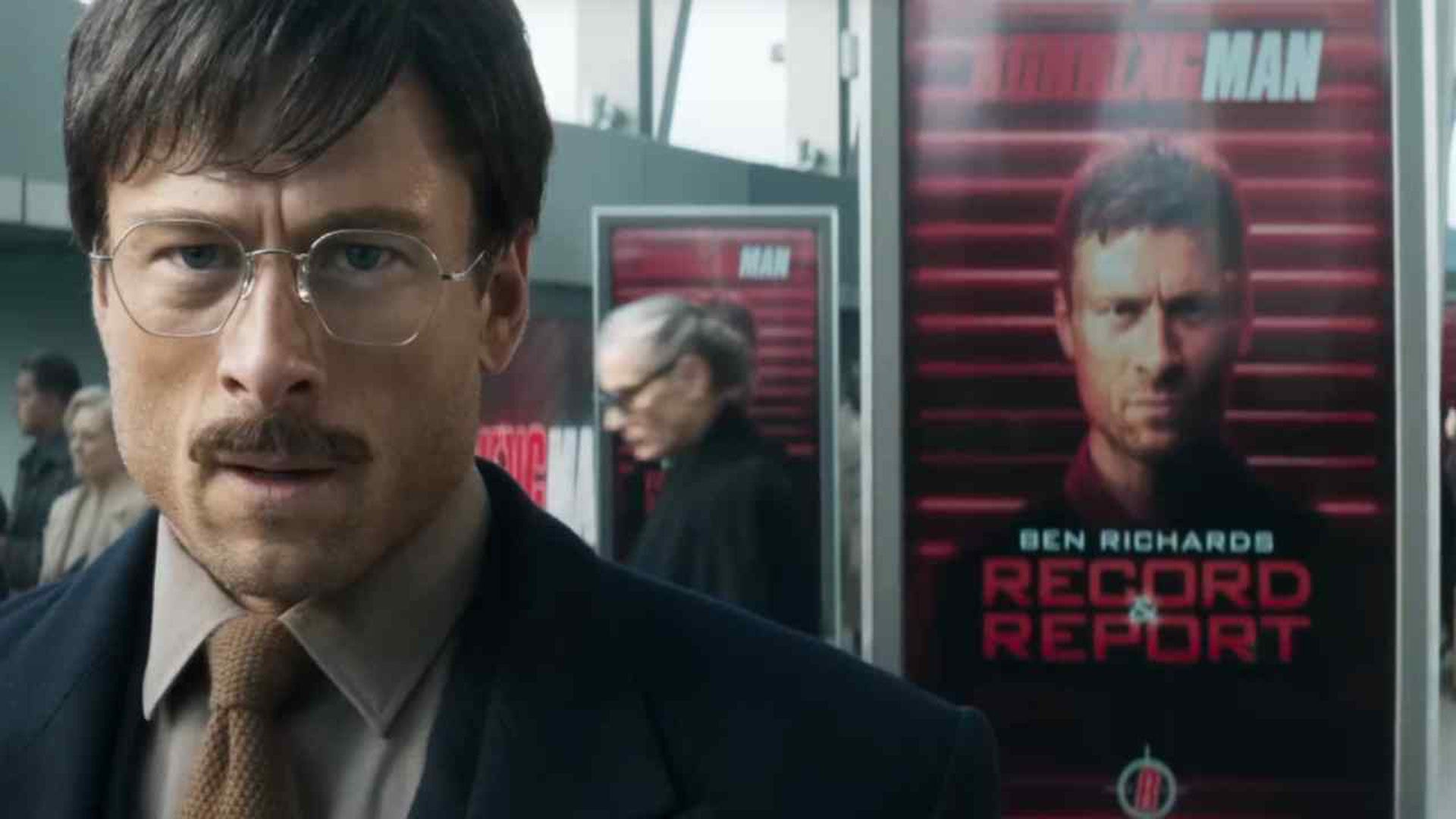
Early in Edgar Wright’s Running Man, Ben Richards (Glen Powell) struts across a future dystopian city while Sly Stone’s “Underdog” plays in the background. The message is clear. Working class dude Richards has been ground down and beaten up; blacklisted from his job for protesting dangerous conditions, without the money to pay for medicine for his desperately ill daughter, angry, desperate, with no choice but to take his chances on a reality tv show where the price of failure is death. “I know how it feels when you know you’re real/But every other time/You get up, you get a raw deal, yeah,” Sly wails, while the horns, the background vocals, and the unbelievably hot drums surge out of funky mud and take off for the stars.
—
Everything Is Horrible needs your support! There’s a 40% off sale, $30/year. Please consider coming on board so I can keep scribbling.
It’s a perfect theme song—not least because, in a film about deceptive manipulation, its use is manipulative and deceptive. Stone’s music—played by an interracial ensemble—is universal in aspiration and implication, but it’s rooted in Black experience. When Stone sings about being the underdog, he’s talking, specifically, about being a Black man in America, even if he’s phrasing it in a way that is open enough to inspire the liberation of everyone—including, notably, the women and queer people in his band.
Running Man has an interracial and queer cast as well; Richards’ wife and daughter are Black, and one of his fellow contestants is a lesbian. But the film is not about a hippie sixties vision of integration as liberation. Instead, it’s a vaguely but not really colorblind parable about a downtrodden angry working class white guy taking his rightful place as Hollywood hero—all in a narrative that openly admits it’ s bullshit, even as it continues to shovel the bull.
You probably already know the general setup from the Stephen King novella or the 1987 Schwarzenegger vehicle: Richards has to survive for 30 days while being hunted by professional killers and the entire population of the US, who are convinced he’s a dangerous criminal/slacker. He gets more money the longer he survives and the more people he kills. But the game, he soon discovers, is rigged by network exec Dan Killian (Josh Brolin), whose goal is to keep the audience narcotized and bloodthirsty—even if it means he has to make Richards a star to do it.
Wright has a quirky genius for physical set pieces, and there are a couple of wonderful bits, including a flight in an intermittently freefalling airplane and a scene of naked eye-candy Glen Powell rappelling down the side of a building. In other respects, though, the movie feels curiously unmotivated, without the propulsive energy of the novella or the first film version. Among other things, Richards spends an awful lot of time listening to exposition and explanation rather than…well running. The conclusion in particular feels like a rip off—an obligatory Hollywood happy ending which makes neither narrative nor emotional sense.
To some degree, this seems thematic; the point of the film—repeated over and over with the earnestness of a monologue by a crank at the end of the bar—is that big budget entertainment is a simulacra and a con. Capitalism’s goal is to get you so invested in entertainment as hate, and hate as entertainment, that you don’t notice that the real enemy is the corporation selling you the anger and truthiness. An appropriate message for our Fox Newsified America, you’d think.
And yet, somehow a film about American hate and propaganda feels less like a pointed critique and more like just more of the usual American hate and propaganda. The dystopia on screen is notably and carefully devoid of most of the prejudices that have enabled our current nightmare; there’s no racism, no homophobia, some not much analyzed sexism around the edges, no partisanship, not even any particular anti immigrant hatred. All there is left is class hatred, conveniently directed against the one persecuted white guy against whom the whole country is united—up until the moment when everyone decides he’s cool, and turns their rage and violence against the other white guy.
Richards has to be a white guy because Hollywood action movies are still overwhelmingly framed around white guys. Killian thinks Richards has star power, you have to think, not because of the battery of cutesy personality tests, but because he looks like Glen Powell. Intersections of race and class can be hinted at, but have to be defused in a mainstream blockbuster which wants to avoid any controversy that might upset the powers that be or turn off the anti-woke.
You could argue that Wright’s lackluster effort here is a kind of ironic self-sabotage; studio execs asked for a boilerplate antiestablishment screed in which the usual white guy rails against the elites without actually upsetting the elites or alienating Trump voters in any way, and that’s exactly what Wright gives them, in a bland obviously fake package which keeps nattering on about how bland and fake it is.
Even if Wright did deliberately sandbag the thing, though, it still goes over like a wet sandbag. King’s original is fueled by a real sense of hatred and baffled white male entitlement, but I don’t think you can effectively critique that by just going through the motions and offering the same tired story beats while pointing out that they are story beats and that they are tired. Sly Stone’s “Underdog” is a scrappy triumph of joy and mutual art over prejudice and a dull status quo. Wright’s Running Man, however self-aware, just drags you along on another round of the same boring game where everyone loses.
I'm glad I don't watch movies anymore. I'm sure there are good ones, but I don't have the patience to dig through the slop anymore.
"I know how it is to have to go along with a whole lot of people you don't even know/simply because there happens to be a whole lot more of them."
Early Sly is the best Sly- that brutally honest song comes from that time.