

As a society, we are obsessed with narrative melodrama. Scholar Linda Williams defines melodrama as a genre about injustice which “offers the contrast between how things are and how they could be, or should be.” Thus, a film like Schindler’s List contrasts the violence of the Nazis in murdering Jewish people with the courageous actions of Schindler in saving them.
—
Everything Is Horrible depends on reader support. If you find my writing valuable, please consider becoming a paid subscriber. It’s $50/yr, $5/mo.
We could and should, melodrama says, all be like Schindler and all save the world. Understanding this moral truth, and identifying with this moral truth, is crucial to the power of melodrama, which is why Schindler’s List ends with Jewish survivors praising Schindler and offering him a gift, as he in turn acknowledges the honor they are doing him. Williams points out that melodrama turns on “the dramatic recognition of good and/or evil”; Jews recognize Schindler’s virtue, Schindler recognizes the virtue of Jewish people, you as the viewer recognize the virtue of both, and aspire to be part of this virtuous, healed community and world.
It is, of course, no accident that the virtue you are recognizing here is that of an oppressor whose fundamental goodness is cosigned by the oppressed. Melodrama does not have to be solely a story of white saviors. But in a white supremacist society, the emphasis on moral transformation and recognition often leads to tales of redemption of the powerful, rather than to stories in which oppressed resistors recognize the moral evil of their oppressors and the need for revolution. (Stories about white rebels a la Red Dawn or, say, any random superhero movie, are a different matter.)
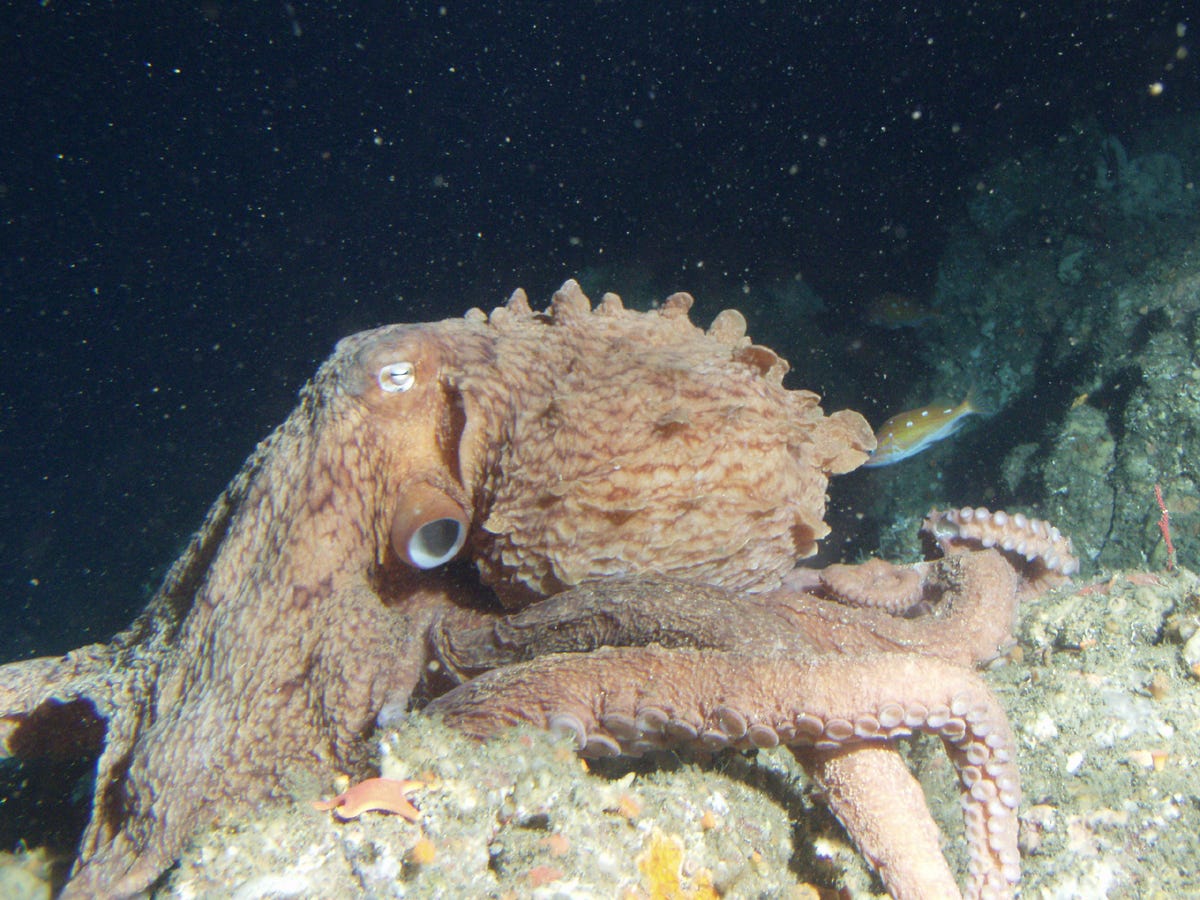
After you’ve been introduced to the narrative tropes of liberal white melodrama—the introduction of a flawed world, the mutual recognition of virtue between someone in power and a worthy subaltern, the establishment of a transformed world—you see them everywhere. Which is not always ideal. Personally, my familiarity with the form ended up ruining my enjoyment of Shelby Van Pelt’s hit sappy octopus melodrama, Remarkably Bright Creatures.
I was interested in Remarkably Bright Creatures for the reason most people are probably interested in Remarkably Bright Creatures—octopi are cool. And to be fair, if you are looking for cute octopi, the novel delivers. Here’s an excerpt from the first chapter:
Who am I, you ask? My name is Marcellus, but most humans do not call me that. Typically, they call me that guy. For example: Look at that guy—there he is—you can just see his tentacles behind the rock.
I am a giant Pacific octopus. I know this from the plaque on the wall beside my enclosure.
I know what you are thinking. Yes, I can read. I can do many things you would not expect.
Charming, right? I came to be charmed, and I was charmed. All good!
Unfortunately, though, after that first chapter, we start to ramp up the melodrama. And it gradually was born in upon me that Marcellus is not just an octopus in this narrative. He is a subaltern. Which means he functions in the novel the way Jews function in Schindler’s List, or the way Black people function in Amistad. And turning Jews and Blakc people into octopi is…not ideal.
I’m sure that some will insist I’m seeing things, but the tropes are a lot less well hidden than the octopus behind the rock. Marcellus sees himself as oppressed; he’s imprisoned in the aquarium. At times he sneaks out of his tank to go gather food, and on one of those expeditions, he gets tangled in some electrical cords. He is freed by our hero (and his), Tova Sullivan, the aquarium’s cleaning woman.
Tova is elderly and on the surface emotionally withdrawn, in part because of the death of her teenaged son some thirty years previously. But she has a hidden well of kindness, which Marcellus recognizes. After she saves him, he devotes the remainder of his short lifespan to helping her—a development which has uncomfortable parallels with all those stories in which white heroes save indigenous others and the indigenous others then dedicate themselves to the white hero’s service.
Marcellus is able to help Tova because he has an almost supernatural power of recognition; he identifies her grandson before she does, and he then sets about alerting her to said grandson’s identity so that she can be reunited and healed. The emotional and ethical crescendo of the novel occurs when Marcellus manages to communicate with Tova this crucial information, and she in turn recognizes him as a sentient being and, even more importantly, as a moral actor.
“You knew, didn’t you?” she says to Marcellus in the bucket. “Of course you did.” She leans down and touches his mantle again. “You’re so much more intelligent than we humans give you credit for.”
Marcellus lays the tip of one of his arms across the back of her hand.
Tova crumples to the ground again, this time propping her elbows on the rim of the bucket. Once the hot, fast tears start spilling, she’s powerless to stop them.
Tova then takes the octopus to the ocean and frees him (he is about to die of old age anyway, and a new octopus has already been found as a replacement, so there are no uncomfortable legal issues.) She and Marcellus are thus both healed through mutual recognition and the moral order of the world is restored.
Having an octopus spontaneously decide to subordinate himself to the narrative arc of a human hero is obviously a lot less offensive than having a Black person do the same for a white person, or having Tonto embrace being second banana to the Lone Ranger. This is, I think, the point of the novel, and part of the key to its success (and the success of the Netflix film based on it.) You get all the narrative beats of liberal white melodrama without the bits that have, over time, been recognized as politically squicky. Octopi are not actually sentient. Even taking environmental issues into consideration, Marcellus does not really represent an oppressed people. Mutual recognition between the powerful and the powerless can occur without any real life politics hoving into view. The camouflaged octopus serves as camouflage, obscuring power dynamics so that we can gaze at him, and have him gaze back, unimpeded.
Unfortunately, as I said, I’ve looked at a lot of liberal white melodrama, and I can’t help but see it even when an octopus is draped over it. It’s good that the novel is not directly denigrating some marginalized group. But it’s maybe less good that it reiterates that the one and only way of interacting with difference is through the narrative structures that have reliably been used to deny narrative primacy to marginalized people—the same narrative structures that insist that justice and freedom are contingent on the oppressed first recognizing the virtue of their oppressors.
I don’t need Marcellus to shatter his tank, rally the wolf eels, and devour Tova in a revolution of blood and brine. But it’s hard not to compare something like H is for Hawk, a film about grief and hawks in which the (much more ambivalent) recognition between impossible bird and impossible human is about shared otherness in a world that can’t exactly be healed. Even within the bounds of melodrama, other stories are possible—ones, perhaps, about solidarity across difference, rather than about assuring those with power that they are good people.
Marcellus is a fictional octopus. But if we’re supposed to believe in his sentience and his virtue, then we have to believe that he is valuable for his own story, not because he squirms into the story of someone who looks more like us. Moral recognition is not worth that much if you look in the octopus tank and only see yourself.
I find myself being troubled by certain books without having the language for what, exactly, is troubling me. I appreciate that you are able to articulate what is discomforting so clearly. A book I recently read fits the definition of “melodrama” right up until the end, then pulls back. It gave the sense that the oppressed had agency, but chose the oppression. The savior either couldn’t or didn’t offer salvation and I was left with the feeling that either the oppressed character was truly “other” (not human but otherwise seeming human) or genuinely wanted to be used by her human oppressors. I’m still troubled by it.
Anyway, thank you for giving me more ideas that help me understand the world.
Elaborate stories to explain how Others just want to serve and/or humor us because we are wonderful, not because we have crushed them and taken away their other options. Do we need a short, catchy pejorative for this societal neurosis? "Butler kink" maybe?