

This week, House Minority Leader Hakeem Jeffries has been trying out some new rhetoric around ICE, Trump’s gestapo kidnapping force. Emboldened by polls showing that abolishing ICE has plurality support after the despicable on-camera murder of VA nurse Alex Pretti, Jeffries held a press conference in which he stated, “Taxpayer dollars should not be spent to brutalize and kill American citizens. Taxpayer dollars should be spent to make life more affordable for everyday Americans.”
In some ways, this sounds like boilerplate; Democratic leaders have been shouting and muttering and chanting “affordability” at every opportunity, since it polls well and is generally thought to be the theme that won Trump the 2024 election.
But the consultant speak can’t completely hide the fact that this is also a departure. Jeffries is contrasting spending on law enforcement—dollars which “brutalize and kill American citizens”—with spending on social services like healthcare, housing, and education, which can “make life more affordable.”
—
Everything Is Horrible is entirely reader funded. That means I need your help to keep scribbling. Help! Please consider becoming a paid subscriber; it’s $50/yr, $5/month.
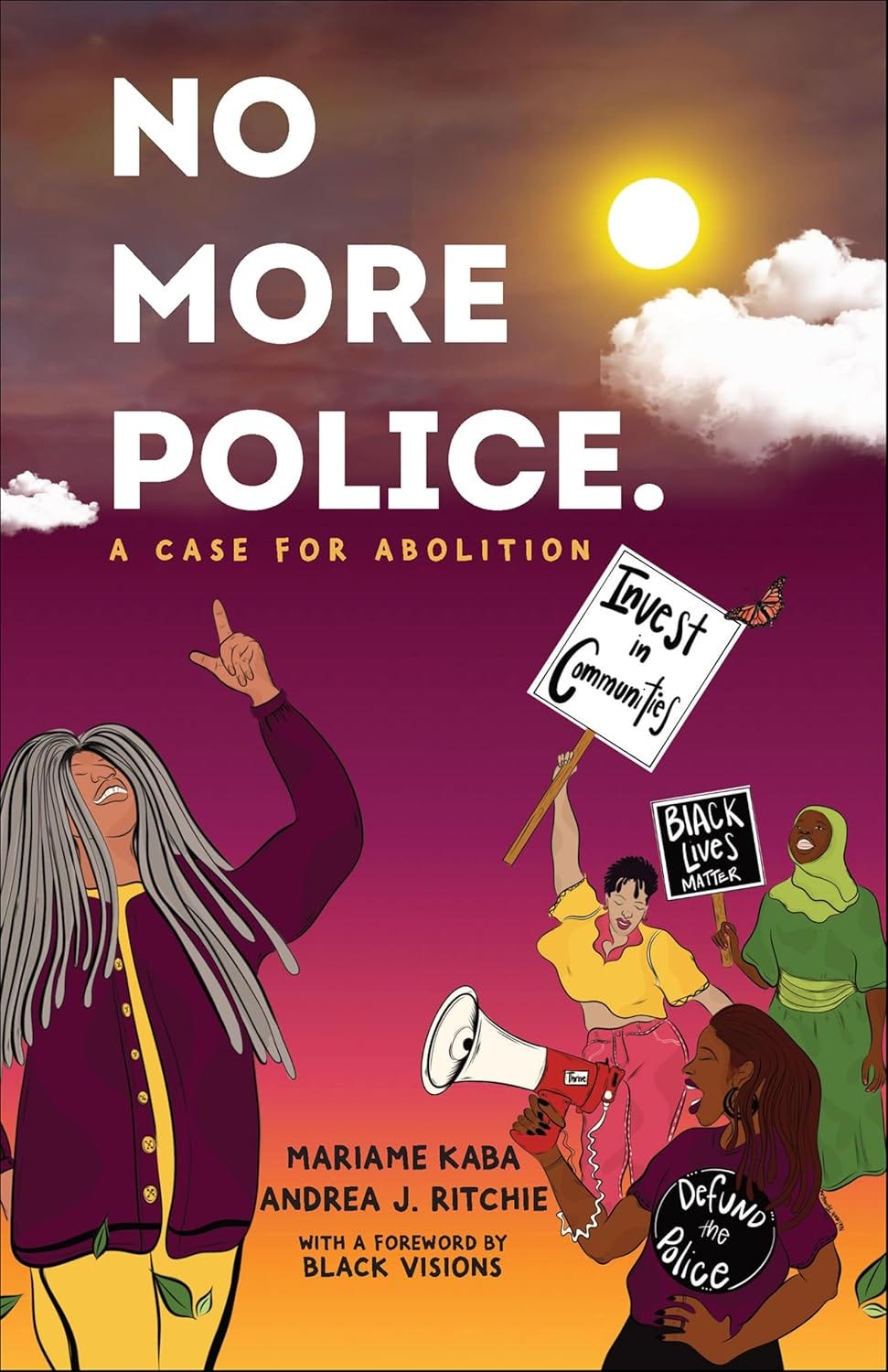
This juxtaposition isn’t new. On the contrary, it echoes the main arguments and goals of the “defund police” movement. So, for instance, Mariame Kaba (for whom I do freelance work) and Andrea Ritchie write that:
defunding police is a survivor-led anti-violence strategy that stops cops from looting resources that survivors need to prevent, avoid, escape, and heal from violence—and puts more money into violence prevention and interruption, and meeting survivors’ needs.
The Legal Defense gets even closer to Jeffries’ formulation:
aggressive policing strategies wreak devastating harm on the very communities they are sworn to protect… state and local governments should instead invest in social services, educational resources, affordable housing, employment opportunities, and quality healthcare that would enable impacted communities to ensure the safety and prosperity of their own neighborhoods.
Invest in social services, not brutalization. That’s (at least close to) the same message Jeffries is trying out.
Where Jeffries gets his ideas
I’m not arguing that Jeffries has been suddenly transformed into an abolitionist. He remains a carceral Democrat. In an interview on Fox he stated that he and his caucus believe that ICE “should conduct itself like every other law enforcement agency in the country”—neatly eliding the fact that police in the US constantly lie, steal, and regularly rape members of the public, to say nothing of the grotesque racism that pervades the justice system. Among the reforms Jeffries is pushing is mandatory body cameras, even though data on whether body cameras actually reduce violence is weak at best—in part because police manipulate what footage is seen and released—and spending money on body cameras is effectively giving even more money to ICE, rather than spending on the affordability that Jeffries claims is his priority.
Jeffries is not a progressive. But that doesn’t mean he is locked in a progressive-proof box where he never hears any ideas from his left. On the contrary, Jeffries’ caucus includes a good number of people who are familiar with abolitionist ideas and with the basic tenets and arguments of defunding the police.
Representative Alexandria Ocasio-Cortez (NY) for example had a viral moment in 2020, during the George Floyd protests, when she explained that defund the police basically describes white suburbs: “Affluent white communities already live in a world where the choose to fund youth, health, housing etc more than they fund police.” Representatives Delia Ramirez (IL) and Yvette Clarke (NY) have introduced a MELT ICE act which would defund ICE and use the money to fund housing and healthcare in communities affected by Trump’s immigration depredations. And of course the increasingly popular call to abolish ICE is an outgrowth of the call to abolish prisons and police.
Jeffries is unlikely to ever say the words “abolish ICE”. But neither is he calling to transfer ICE funding to other law enforcement agencies, or boasting about Democratic plans for more policing. Suggesting that dollars for law enforcement might be better spent elsewhere is not an especially impressive realization given the current nightmare. But it is a change in direction for a party leadership that has for years—and especially since 2020—been terrified of any suggestion that they are not backing the blue. Jeffries is tentatively, incrementally creeping towards getting out of his defensive crouch—and the place towards which he is incrementally creeping is the territory cleared by defund advocates.
Policy is not always about winning elections
The point here is not to praise or validate Jeffries, whose centrist policies and priorities I broadly abhor. Rather, the point is to underline the influence and importance of the defund movement, which centrists (and the right) have been demonizing for more than half a decade now.
Reactionary centrist pundits like Matt Yglesias, Noah Smith, and Bill Clinton attacked defund in part because they believed that less spending on police would damage public safety, but even more because they argued that defund was unpopular and would hurt Democratic electoral outcomes.
There was strong evidence that the Black Lives Matter protests helped Democrats in 2020, and no reputable analyst thinks that defund the police was a major issue in the 2024 election. Nonetheless, “defund the police” has never polled very well with voters. Copaganda is omnipresent and people tend to believe the best of police even when evidence and their own interactions don’t bear out the officer friendly meme. And if a slogan and a policy fails to win the hearts of voters—if it doesn’t help Democrats win office—what good is it?
Winning elections is important, as our current post Trump victory reality testifies. But it’s not the only thing that matters in general, and not the only thing that matters in fighting fascism in particular. “Defund the police” was not developed primarily as a vote getter. Rather, it was a policy proposal based on the experiences and needs of marginalized communities facing a discriminatory and fascist policy of disinvestment and hyper authoritarian policing, in which marginalized people—especially Black people—routinely experiencing higher rates of negative police contact. “Every time you see me, you want to mess with me,” Eric Garner said in 2014 when police officers harassed him. Moments later officer Daniel Pantaleo choked him to death.
The insight of defund police—based on the insights of abolitionists—is that the destructiveness of policing is not a failure of procedure or training, but is instead tied to the ubiquity of policing, which in turn is linked to way that the social safety net has been hollowed out and replaced with more and more law enforcement. More cops on the street with better equipment does not mean better law enforcement; it means more police terror, more police violence, and more fascism. The solution is not recalibration or rejiggering. The solution is less—and ideally none.
Minnesota as a whole is currently experiencing the kind of constant harassment usually confined to marginalized communities, in which people are criminalized just for existing or venturing out in public. And people and politicians watching the horror in blue cities unfold have been able to reach for the analysis and the ideas that the defund movement developed to criticize ICE’s tactics and to think about how to address them.
Defund was, and is, important because pouring resources into the police creates a police state, for marginalized people first, but eventually for everyone. If you want to protect democracy, you need to develop and advocate for antifascist policies and strategies—even if those strategies are not popular initially, even if those strategies don’t immediately lead to electoral talking points. When fascist build power, you have to oppose them.
Defund is an antifascist strategy. We’re lucky advocates and activists took the time to create it in the face of indifference, criticism, and ridicule. I doubt Hakeem Jeffries would admit it, but even he, hesitantly and belatedly, seems to realize that we need it now.
Thank you for this article and helping me think through this issue.
We have such powerful police unions here. Where I live, they circle the wagons whenever there’s any criticism. About 15 years ago, a police officer shot an unarmed 15 year old (to death). The internal investigation resulted in not even a jury trial because the union put so much pressure on. Any attempt to defund will need a strategy for the unions.
People are more ready than they ever have been.
Fighting fascism will help us ensure we have elections in the future, which is foundational to being able to win one.
I appreciate you sharing the findings about the electoral effects of the Black Lives Matter protests. I hadn't seen that before, and it's good to see. It looks like it may be the exception rather than the rule, but still encouraging ( https://www.library.hbs.edu/working-knowledge/do-protests-and-social-movements-sway-voters-not-really-except-for-one ).