

Ella Langley’s hit song “Choosin’ Texas” has broken Mariah Carey’s record for the longest-running song at the top of the Billboard Hot 100.
You may not have heard “Choosin’ Texas.” Indeed, when you hear the name Ella Langley, you may say, as Doja Cat has, “I don’t know what that is.”
Being familiar with a pleasant vaguely neotraditional country song, popular or otherwise, seems like it doesn’t have any particular moral implications. If you have heard the song and like it, great! If you haven’t and/or don’t, that’s okay too. No one is keeping score. Right?
Not so, according to Rolling Stone. Marissa R. Moss furrowed her brow, wagged a finger at Doja Cat, and took to the pages of the venerable website to declare that:
if someone contends they’ve never even heard of “Choosin’ Texas” or Langley, it may say more about the listener than the song. Or, for that matter, what they want to project to the world. With incessant news coverage alongside chart and playlist presence, it’s pretty difficult to still claim total ignorance on this one. Perhaps there is a deeper reason why people say they haven’t heard the song and feel the need to make it known: cultural cachet.
You’ve probably already guessed where this argument is going. Moss argues that people like Doja Cat who pride themselves on not listening to country music are sneering urban hipsters who look down on the working-class masses. “It’s shorthand, often, for liberal politics and a way to separate oneself from anything that could be associated with rural or Southern stereotypes.”
“Shorthand for liberal politics” there is doing a lot of work. What are the non-liberal politics that country music embodies? Why might someone like Doja Cat not keep up with the latest country hits? Could it, maybe, have something to do with racism?
Country music is defined by whiteness
Country fans and apologists often claim that country has some mystical connection with working class authenticity that other music genres lack. But the truth is that there are a whole range of genres with working class roots. Leadbelly, a blues and folk artist was first recorded while serving time for murder in Angola Penitentiary.
Louis Armstrong was an impoverished child in New Orleans who first learned to play the trumpet in juvenile detention (he went on to record a song with country star Jimmie Rodgers about being harassed by cops.) Ray Charles, a pioneer of rock and roll and soul, was the child of a laborer and a laundress. The founder of hip hop, Kool Herc, was the son of a factory foreman; the family emigrated from Jamaica to the US when he was a child.
Nor is country alone in its engagement with working class lives or working-class concerns. Folk guitarist Tracy Chapman sang about being trapped in dead end jobs and dead end lives; hip hop pioneers de la Soul have a song about working at McDonalds.
Open Mike Eagle’s 2017 album Brick Body Kids Still Daydream is a concept album about growing up in the projects on Chicago’s South Side.
What separates country from blues or hip hop or rock or disco isn’t that country is the true music of the working class. What separates country is that it’s the contemporary music genre most defined by, and most closely associated with, whiteness.
Whiteness and country
As I’ve discussed before, music genres in the US were created and curated as a form of racist segregation. Race records and hillbilly records in the 1920s were defined not by formal differences but by the race of the performer. Similarly, over the years rock music was defined as white music in contrast to funk or soul or R&B, which were defined as Black music.
Country has long been whiter even than rock, though. Its claims to working class authenticity have been inseparable from its claims to white working-class authenticity. In country, whiteness is associated with hard work and hard work is a guarantor of whiteness in a calculus expressed most explicitly (and most unfortunately) in Merle Haggard’s ugly, racist “I’m A White Boy.”
This doesn’t mean that no Black people ever played country or ever enjoyed country. There are many Black country fans, and many Black people have covered country songs.
For that matter, many Black musicians have more or less explicitly devoted their career to country music. Swamp Dogg is generally thought of as an R&B performer, but he’s heavily influenced by country music; Doris Duke’s album I’m A Loser which he produced is a country album in all but name.
And of course Beyoncé released a country album in 2024 in which she teamed up with contemporary Black country artists like Shaboozey and Brittney Spencer.
Beyoncé’s interest in country, though, has been greeted with skepticism and churlishness by many of the genre’s leaders. Country singer and all-around asshole Travis Tritt sneered, “As a country artist I’m insulted that the CMA thinks we have to have a pop artist on our award show to appeal to big crowds,” after Beyoncé appeared at the CMA’s in 2016. Similarly in 2019, Lil Nas X’s “Old Town Road” was booted from the country charts for being the wrong sound—ie, for being created by a Black artist.
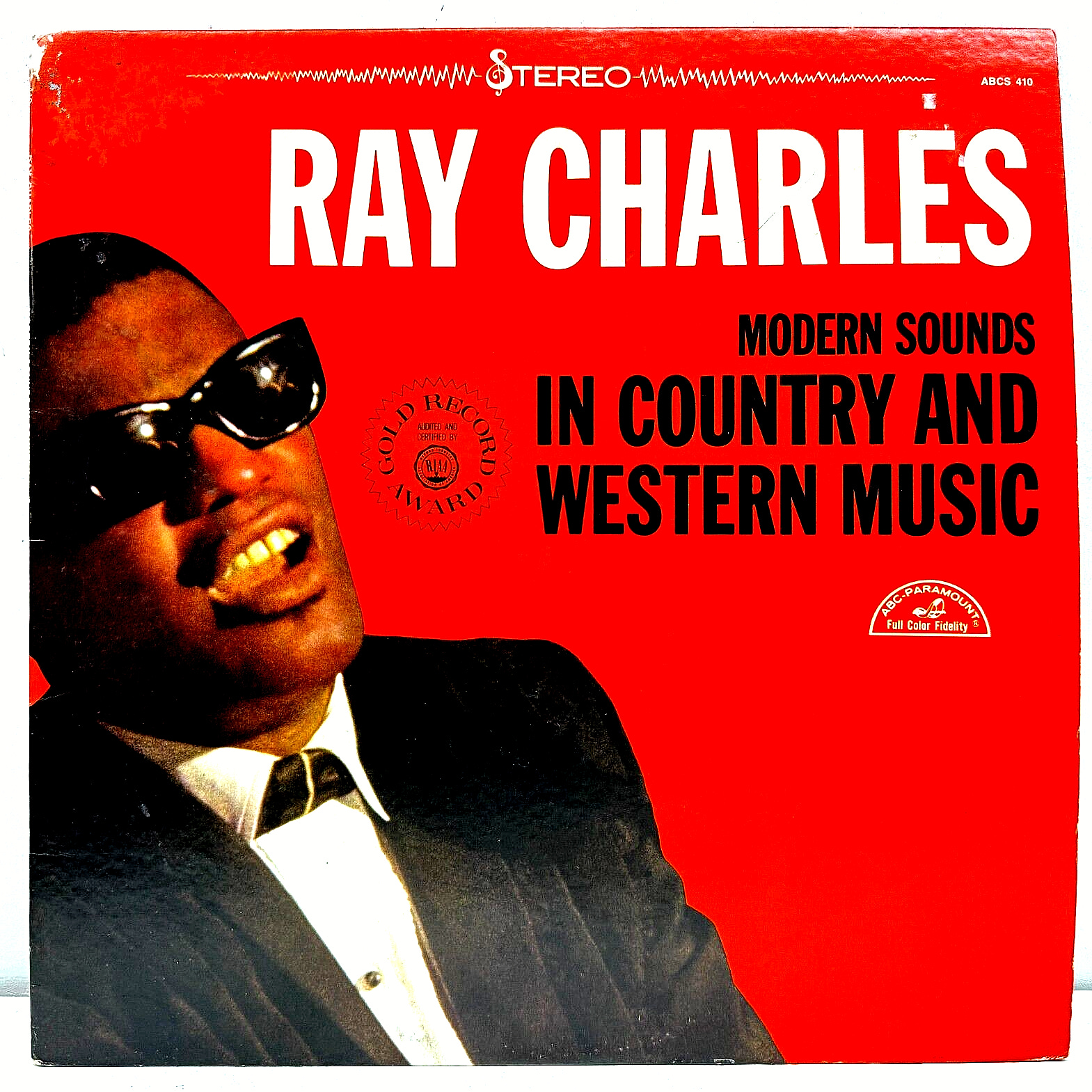
This isn’t a new problem; Ray Charles’ 1962 Modern Sounds in Country and Western Music was the biggest selling country album ever to that time, but he struggled to get country radio airplay.
Clarence Carter’s “Patches” is one of the all-time great country songs, but it’s hardly ever considered part of the genre.
Even today, Valerie June is generally slotted into folk or blues or R&B, though her delivery couldn’t be much more country.
Black people’s contributions to country music are either erased and become invisible or are perceived as hypervisible and illegitimate and are therefore policed and denigrated. The few exceptions, like Charley Pride, are tokenized and used as shields when anyone brings up the genre’s uglier history—like pioneering country star Fiddlin John Carson’s performances for the KKK, or 50s star Marty Robbins’ ugly segregationist anthem, or the racist attacks and bomb threats faced by Black country star Charley Pride.
Country excludes people
So, given that history, why might Doja Cat, or other people like Doja Cat, not spend their time keeping up with the latest country music hit?
Francesca T. Royster, author of Black Country Music: Listening for Revolution (2022), argues:
Black people’s discomfort with and rejection of country identity and country music have to do with distancing from rural life and the South associated with a painful past: sharecropping, slavery, land loved and won and stolen, often violently.
More directly, country music is associated with a white identity that is formed through explicit rejection and denigration of Black people.
More, the rejection of Black people, the centering of whiteness, is why critics and fans view country music as uniquely authentic and working class. Through the usual process of projection, Black people, who were enslaved and forced to work for nothing, are seen as lazy elites by the Travis Tritts of the world, who frame Texan Beyoncé as an uppity outsider to true Southern authenticity. Meanwhile, white people—enriched through Black people’s labor—are identified as uniquely hardworking, uniquely salt of the earth, uniquely American.
This is the logic whereby it is suspicious, elitist, unAmerican, to say you haven’t heard a country song. And it’s the logic whereby the one person singled out for failing to have heard that song, the one person identified as maybe indulging in inauthentic speech for the purpose of cultural cachet, just happens to be a Black woman.
Country, like the country, is what we make it
Again, this isn’t to say that country is always everywhere definitionally racist; nor is it to say that all Black people dislike country music. Black people have always been part of the history of country music, and they always will be.
But Black presence, influence, and participation in country music is and has been heavily contested by the worst people on earth. Some Black people have reacted to that by insisting on making themselves heard within the genre. Some have instead, and understandably, chosen to opt out. And some people who aren’t Black have also been put off by country’s past choices to double and triple down on white identity and exclusion of Black people—and not just Black people. There is a similar dynamic in country excluding LGBT people, and not infrequently even excluding straight white women.
Some people, obviously, don’t listen to country music because they don’t like it for the ineffable and unquantifiable reasons that people sometimes do and sometimes don’t like art. Some people haven’t heard “Choosin’ Texas” because they don’t listen to much new music, or because they just didn’t happen to hear it. Not everything has to be a think piece.
But there are in fact people who affirmatively and aggressively distance themselves from country music. That can be annoying for fans like me or like Marissa Moss. But given the history and the present, it is incumbent on fans, and maybe expecially incumbent on white fans, to remember that country music has affirmatively and aggressively distanced itself from a lot of people over the years, most definitely including queer Black women like Doja Cat (or, going back a ways, Rosetta Tharpe).
None of this means you have to stop liking country music. It does mean, though, that fans and critics, have a responsibility to avoid repeating that history of exclusion. You should not, for example, imply that people who don’t pay attention to country must be snobbish citified elites. You especially shouldn’t imply that when your main example of someone not paying attention to country music is a queer Black woman.
There is no particular ethical censure due people who haven’t heard “Choosin’ Texas.” But if you are a country music critic, and especially if you are a white country music critic, and you have not educated yourself about the genre’s histories of racism, then you do in fact have an intellectual and moral obligation to do better.
You can find an Apple Music playlist of the songs discussed in this article here.
Sneering at people because they *haven't heard a song* is the kind of insane bullshit that right wing shitheads accuse the left of doing.
The only reason I've heard the song is because it started playing on the Internet radio playlist that plays at work, and I honestly wish I hadn't. It represents some of the worst parts of country music in my eyes (or ears, I guess). It's the same thing I've heard country singers whining about for years , except it's about a woman losing her husband instead of the other way around. Its even got product placement for jack Daniels for fucks sake.
I can't help but think about bo Burnham's parody song Pandering and how spot on it is.
There is no one kind of "country music". The histories of "hillbilly" music from the 1920s, bluegrass, americana, western swing, Nashville MOR "countrypolitan", and "outlaw" music are all part of this broader label, and show how much and how far the broader genre has evolved in representing the musical forms of the areas of the western and southern U.S. that it claims to represent.
And it has also been the genre that has arguably dispensed with some of what used to make it unique and thus compromised itself. You only rarely hear fiddles or steel guitar on modern records, and they used to be indispensable Nashville elements. And while earlier generations of country artists truly lived the lives of the people they sang about, current ones seem far more like cosplayers of the country music artist stereotype than anything else.