

—
The newsletter has a 40% off sale today; $30/year. This month has been veeery light on new subs, and I could really use your help. If you value my writing, please consider coming on board!
—
Leftists and liberals, Democrats, and DSA, everybody with a platform in American politics who is not in Donald Trump’s coalition is eager to rush to keyboard or microphone and declare that, while they hate Trump, they realize that hating him is not enough to win elections. “For Democrats, fighting Trump isn’t enough anymore,” Bhaskar Sunkara, founding editor of socialist outlet Jacobin, declared. “Resistance to Trump isn’t enough,” insisted law professor and centristy contrarian Sam Moyn. Progressive Democratic Senator Chris Van Hollen agrees; so does neoliberal centrist Senator Cory Booker.
Of course, what they all believe we need to do in addition to bashing Trump varies. Booker says Democrats must be the party of “affirming the American dream,” Van Hollen says we have to “shake things up” and push an “aggressive and bold agenda.” Moyn says there needs to be a “plan and promise” to make Congress (yes Congress!) great again; Sunkara says Democrats need to elect Brad Lander and throw Dan Goldman and his ugly Zionism out of Congress.
I want to elect Brad Lander, I’d like a bold and aggressive agenda, I want Congress to be more assertive, and sure, there are some versions of the American dream I can get behind affirming. But I think the range of suggestions indicates that “we can’t just be against Trump” is less a pragmatic or existential strategic imperative, and more a rhetorical intro to whatever other non-hating Trump things the speaker believes should be on the agenda.
Or to put it another way—people don’t want to admit that hating Trump is enough, because all policy proposals in the US are presented first, last, and it sometimes seems only through the lens of electoral politics. Policies are good if they help you win; they are bad if they don’t; they are irrelevant if they have no effect. As a result, everyone is desperate to insist that they have the secret sauce which (combined with hating Trump) will sweep elections and allow Democrats to take power (and implement whatever the secret sauce is.)
The problem with this hyperfocus on electoral outcomes is that a lot of the things that Democrats need to do—not to win elections, but to crush fascism—are not especially popular, and do not have strong factional or interest group constituencies. Eliminating the filibuster, expanding the Supreme Court, enfranchising DC, ending gerrymandering—these are all boring partisan technical fixes that are both crucial and pretty obviously not sexy electoral special sauce.
They are, though, needed to defeat Trump. In that sense, we really may be putting, not too much emphasis on Trump hate, but too little.
Hating Trump will elect Democrats
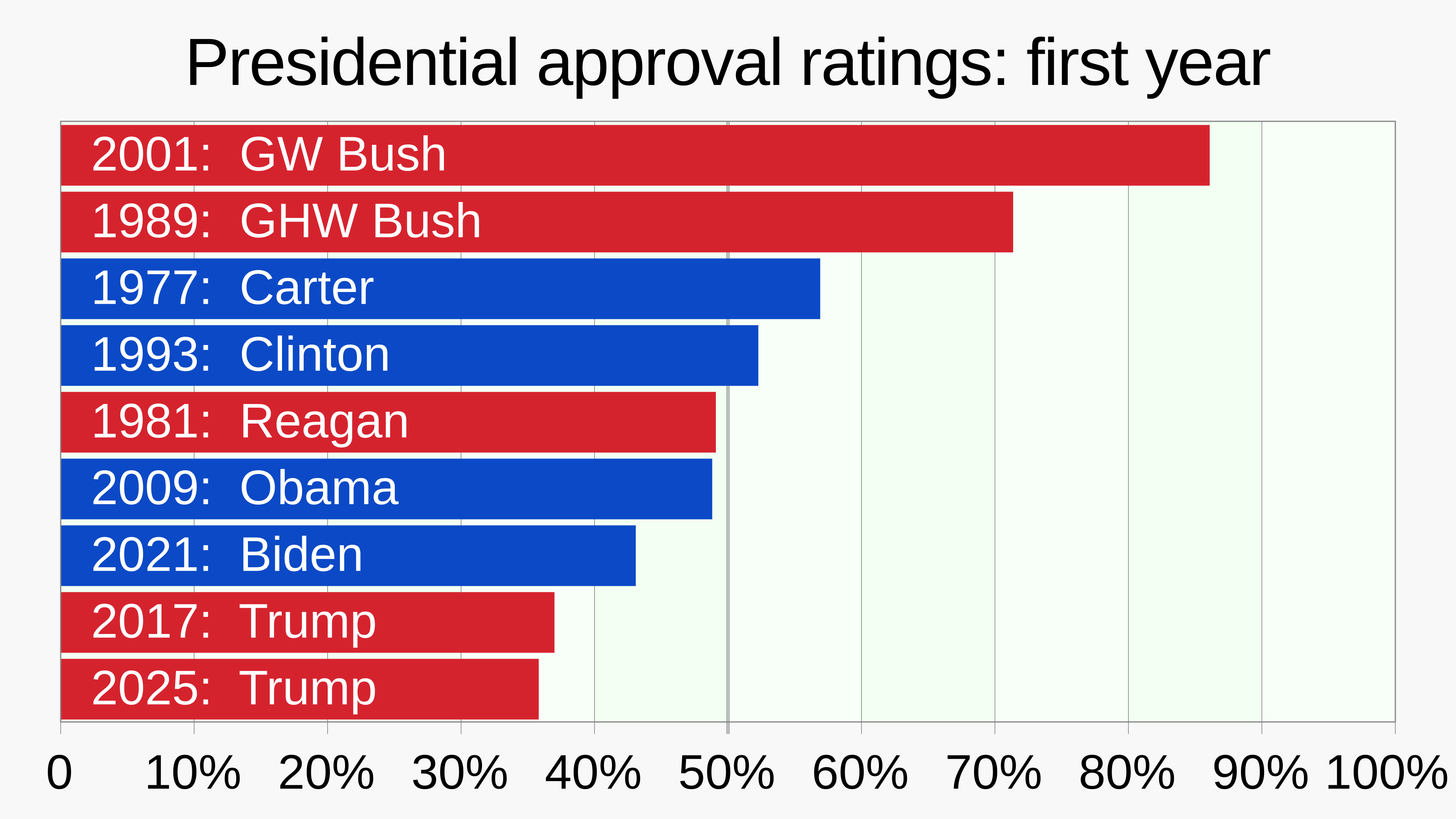
I know there’s going to be some skepticism about the importance of Trump hate in beating the Republicans. But the best evidence is just that Democrats of all sorts, pushing a range of policies, have done very well in election and polls in 2025 and 2026 and the clear common denominator is that Trump’s approval is shit and people hate him.
In November 2025, Zohran Mamdani—a socialist anti-Zionist, won a commanding victory over Trump associated candidates to become mayor of New York. At the same time, Abigail Spanberger and Mikie Sherrill, centrist Democratic cop-friendly candidates, won commanding victories in Virginia and New Jersey respectively over Trump associated candidates. At the same time, California voted overwhelmingly on a referendum to redistrict and give Democrats more power, entirely on the grounds that Trump is disgusting and needs to be stopped. There was no other issue affecting that particular ballot; Trump hate was the whole thing.
And so it’s gone, from a Florida special election for Trump’s own home district around Mar-A-Lago to a Wisconsin Supreme Court race and on and on. Democrats have gotten big swings across the map. Polls also show Democrats way ahead of Republicans on many metrics that have historically been predictive of big midterm victories.
It’s true that Democrats have been using buzzwords like affordability with some consistency. But come on. The big thing that Democrats in New York, Florida, Wisconsin, Virginia, and Oklahoma (!) have in common is that they are all running in the United States of America against a party whose president is extremely unpopular.
If hatred of Trump is enough, though, why didn’t Democrats win in 2024? The answer is straightforward; hatred of Trump works when he’s in power and works a lot less well when he isn’t. Voters often operate on the “throw the bums out” model; if things aren’t the way they like them, they blame whoever’s in office. In 2024, inflation was much higher than it had been for decades. This was not really Joe Biden’s fault, but people took it out on his party anyway. Trump is unpopular enough that he probably underperformed badly in 2024—but not by enough to lose given the throw-the-bums-out advantage.
But now that advantage has switched to the Democrats and been supercharged by Trump’s awfulness. As analyst G. Elliot Morris writes, “Democrats are about to be handed a win in 2026–28 by voters who are angry at the party currently in power.”
They are going to be handed that win not by affirming the American dream or by an aggressive and bold agenda. They are going to be handed it because people hate Trump.
Hate Trump, crush fascism, see how it goes
Hating Trump will win Democrats a couple of elections, probably. But it’s not going to defeat fascism. As Morris, notes, given the back and forth of anti-incumbency rage, and the fact that it’s going to take a while for people to get accustomed to the higher prices that higher inflation has locked in (assuming inflation comes under control at all), it’s very likely that Democrats will struggle to hold onto Congress in 2030 and the presidency in 2032.
So, what to do about that? Elliott suggests that Democrats need to put in place really sweeping change. They need, he says, “a president who, in 2029 — like Zohran Mamdani in New York City — says the cost of housing, healthcare, childcare, and energy is the central political question of our time, and who proposes to do something on the scale of that problem.”
I’m pretty skeptical that this will work, given that the presidents Morris cites to support him—FDR and Johnson—lived in a time of much weaker polarization, not least because they lived in a time of much more even bipartisan support for white supremacy. That weaker polarization made it easier to put together a coalition to push through sweeping policies and also ensured less of an anti-incumbent backlash. Morris is proposing a solution which, in a lot of ways, just reiterates the problem.
So, what’s to be done? I think it would be helpful for Democrats to recognize that they may not have a ton of time—and to use the time they do have to radically reform the institutions of government in ways that will make fascism a lot more difficult, even if Republicans are in fact able to get into office sooner rather than later.
This means gerrymandering the fuck out of blue states in 2027-28, and then in 2029 ending the filibuster, expanding the Supreme Court, expanding the judiciary, enfranchising DC, enfranchising any territory which wants it, abolishing partisan gerrymandering, maybe expanding the House, abolishing voter ID, granting citizenship to immigrants targeted by Trump (which is all immigrants), ending Citizen’s United, expelling all Congressmembers who supported the 2020 coup—and so forth.
In short, rather than trying to find some universal program that will wow the electorate universally, I think the Democrats should focus first on an unashamedly partisan attack on fascist power. Not least because any programs that would be important and popular—abortion rights, student debt relief, soaking the rich, medicare for all, raising the minimum wage, free childcare, abolishing right to work—will get struck down by right wing apparathiks on the bench and ground down by traitors in Congress. You need to kneecap those assholes first.
People are reluctant to embrace this kind of program as a top priority for some of the same reasons they don’t like saying that opposing Trump is enough. Democrats are part of a structurally disempowered big tent coalition; their knee jerk instinct is to appeal to non- Democrats and independents in an effort to overcome their structural disadvantages—and also because thanks to ambient racism, everyone thinks white male voters are more real and valuable than anyone else. Democrats want to be seen as nonpartisan, because that feels more virtuous in a political culture that hates partisanship on behalf of marginalized people and because Democrats think appeals to nonpartisanship are the only way they can win.
But as we’ve established, Democrats are very well poised to win in 2026 and 2028, and no one has a very convincing plan for winning beyond that. We do know, though, that the Biden plan of trying to pass good things with as much bipartisan support as possible in hopes that the fascists will never win agai did not work well.
Maybe , then, we should try something else. People hate Trump, so run with that, and embrace a strongly, obsessively partisan program of destroying Trump’s legacy and the forces that elevated him. Fascism in the US has been resilient, and I can’t promise that a couple years of federal power focused on crushing it will be enough to clear the way for a better politics. But I think we need to try, even if we can’t predict future election outcomes. And the thing that will allow us to try, the thing that is going to give us an opening, in a way we have maybe never had before in the history of the Republic, is hating Donald Trump.
Putting up roadblocks to fascism is the only answer. I would like to see the electoral college abolished too. All of the pieces of our system that were originally created to prop up slavery or appease slavers need to go, or be neutralized somehow.